By Debra Rubin | April 30, 2026 – Jewish Link
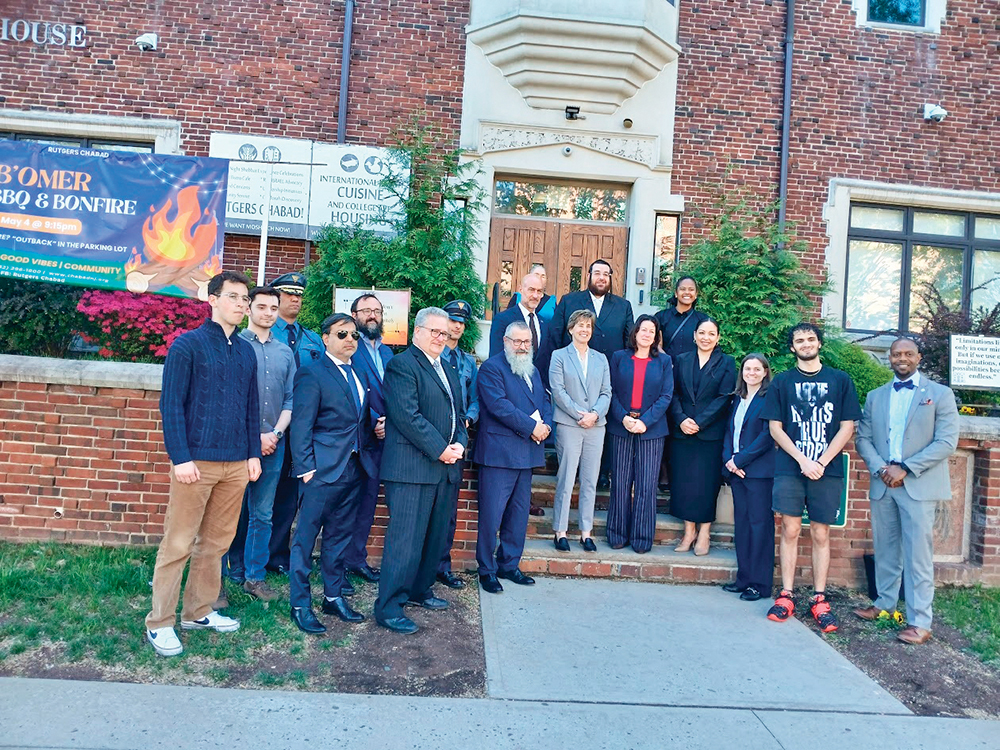
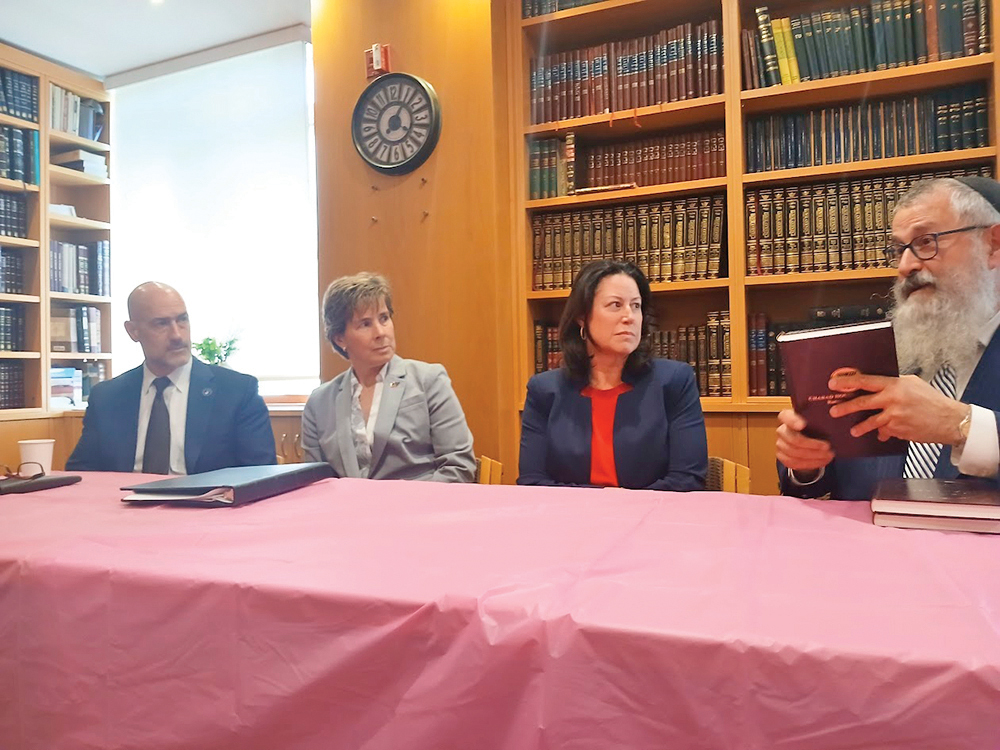
State and county law enforcement leaders came to Rutgers Chabad on April 27 to hear student concerns, answer their questions, speak about layers of protection, discuss how they monitor threats and provide sources where students can turn for help.
The officials who came to the New Brunswick campus included NJ Attorney General Jennifer Davenport, NJ Superintendent of Police Jeanne Hengemuhle, NJ Director of Homeland Security and Preparedness Thomas Hauck, First Assistant Attorney General Katherine Calle and Middlesex County Prosecutor Linda Estremera.
The show of support speaks to the relationship developed with campus, local, county and state law enforcement, said Chabad Administrator Rabbi Mendy Carlebach, a police chaplain with the Port Authority of New York and New Jersey. He said his own exposure to law enforcement has opened his eyes to what goes on behind the scenes to ensure the public’s safety. His father, Rabbi Yosef Carlebach, is Chabad’s executive director and a state police chaplain.
Mendy Carlebach said he met Davenport at a Passover briefing at state police headquarters and invited her to come. He also noted Chabad has always felt supported by the county prosecutor’s office. In fact, Det. Sgt. Andrew Winter, its counterterrorism coordinator, is such a regular at Chabad many students are on a first name basis with him.
“He’s very polite and asks students if they mind if he sits and has coffee with them,” said Rabbi Carlebach. Winter was among those in attendance at the meeting.
“I wanted to be here,” said Estremera, who is fairly new in her position. “There is no question we are here to support you and keep you safe.”
The group spoke of how interconnected the law enforcement community is, from local and campus police to the county prosecutor’s bias crimes unit right up to the state’s Bias Investigation Access System, which operates an online portal for reporting incidents.
Davenport said in case of emergency or serious threat calling 911 should be the first option, but otherwise the portal is a valuable tool for both law enforcement and the public in reporting bias incidents and crimes. The No Hate New Jersey is the educational, anti-bias public awareness campaign that also links to and has information about reporting.
New Jersey state police compiles that information and we put it out to you,” she said, adding not only will she see the portal information but it gets passed along to the divisions of criminal justice and civil rights for review to decide whether it has crossed that line into a crime or whether it is a bias incident.
“We work with prosecutors’ offices throughout the state,” said Davenport, all of which have bias officers. Police and law enforcement are trained in bias enforcement and in working with the homeland security office to determine where the incident falls.
“What were the words or what were the actions or whatever it may be to determine whether that is something that is a bias crime or a bias incident? It’s difficult and it’s hard to hear some things sometimes,” she said. “But it’s our job to make sure we are doing our best and if it’s actionable that we have the right people looking at it to make that action happen.”
Hauck said certain incidents are placed in his office’s SARS (New Jersey Suspicious Activity Reporting System), which he termed “another layer because we don’t want things to fall through the cracks,” and are automatically sent to the FBI.
“They then look at their holdings, locally, nationally, they’re seeing if there is any connection to anything they have going on,” he explained, and decide whether they want to investigate.
If the FBI decides there is no federal need for retaining the report they relinquish it back to the state office where Hauck said his detectives as well as the state police look at the various jurisdictions involved, including “what county does this impact, what municipalities does this impact and we try and reach out to the locals and work together.”
Additionally, through the New Jersey College & University Public Safety Association’s cooperative efforts with law enforcement at all levels, authorities can often detect that trouble at one campus may be spreading.
“Maybe there’s a trend on other campuses that didn’t hit Rutgers yet, but we figure it out before you because we see it’s part of a trend,” said Hauck.
Hengemuhle, who retired from the state police as a lieutenant colonel after 26 years on the job two years ago, says she returned to duty because “I believe in the men and women and I believe in the mission.”